- 26-12-2025
- Artificial Intelligence
AI systems that rely only on language and images fall short of understanding the real world. New perspectives from the Financial Times highlight why spatial intelligence.Spatial intelligence aims to close this gap.
A new article published by the Financial Times argues that artificial intelligence remains fundamentally incomplete without spatial intelligence—the capability to understand, generate, and interact with three-dimensional worlds.
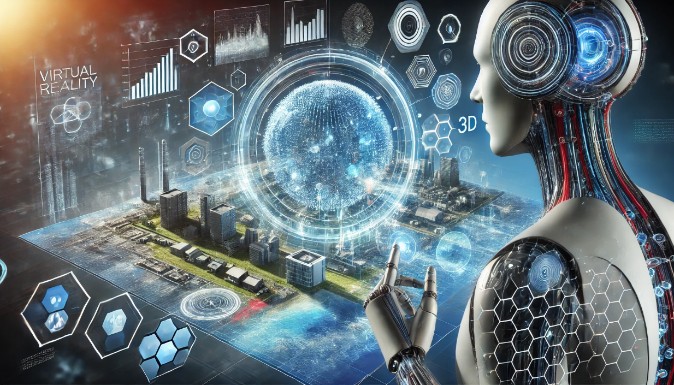
While large language models have transformed how AI processes text, they lack an understanding of physical space. Spatial intelligence aims to close this gap by enabling AI systems to build realistic 3D environments that mirror how humans perceive and navigate the world.
The article explores how emerging world models, developed by companies such as World Labs, allow users to generate immersive 3D spaces from photos, videos, or imagination. These environments can be explored, modified, and exported, supporting workflows across creative industries and technical fields.
Applications span visual effects and virtual production, architecture and interior design, game development, and robotics. In robotics in particular, spatial world models provide safe and scalable simulation environments, helping machines learn navigation and manipulation before operating in the real world.
A key benefit highlighted is efficiency. By drastically reducing the time required for ideation and iteration, spatial AI tools give creators, developers, and researchers more freedom to explore ideas. Rather than replacing human creativity, these systems are positioned as tools that amplify and accelerate it.
The article also frames spatial intelligence as part of a broader, multi-intelligence future for AI. Just as humans combine linguistic, spatial, and emotional intelligence, next-generation AI systems are expected to integrate language models with world models to better understand and interact with reality.
The overall message is clear: advancing AI beyond words and flat images toward true spatial understanding could redefine creativity, simulation, robotics, and how humans collaborate with intelligent systems.