- 29-05-2026
- Artificial Intelligence
Researchers have developed a new light-based switching technology that could dramatically reduce the energy consumption of future AI chips and photonic computing systems. By using light instead of traditional electronic signals.
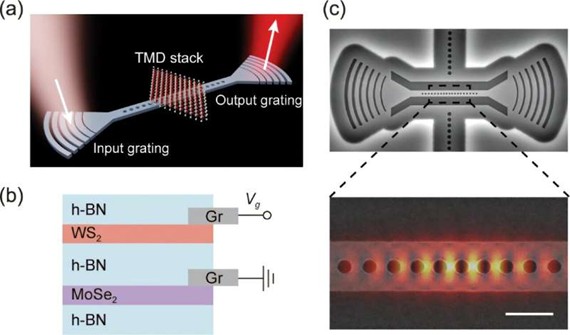
A recent breakthrough in photonic chip technology could help address one of the biggest challenges facing artificial intelligence infrastructure today: energy consumption. Researchers introduced a light-based switch designed to improve how data moves within AI computing systems, potentially enabling faster and more energy-efficient processing for future AI workloads.
Traditional AI chips rely heavily on electronic interconnects, which generate heat and consume large amounts of electricity as data volumes continue to grow. The newly developed photonic switching approach uses light signals instead of electrical signals, allowing information to travel with significantly lower energy loss and higher speed. This could become increasingly important as AI models demand more computational power and data-center capacity.
The innovation is especially relevant for next-generation AI photonics, edge computing systems, and high-performance AI data centers. Light-based processing technologies are being explored worldwide as a solution to scaling limitations in semiconductor design and AI hardware efficiency. Researchers believe photonic architectures may eventually support more sustainable AI systems capable of handling massive real-time workloads without proportionally increasing power consumption.
Beyond improving efficiency, photonic switching may also accelerate developments in autonomous systems, robotics, advanced vision processing, and future communication technologies such as 6G networks. As AI adoption expands globally, innovations in energy-efficient chip design are expected to become critical for balancing computational growth with environmental sustainability.